What You’ll Love About This Recipe
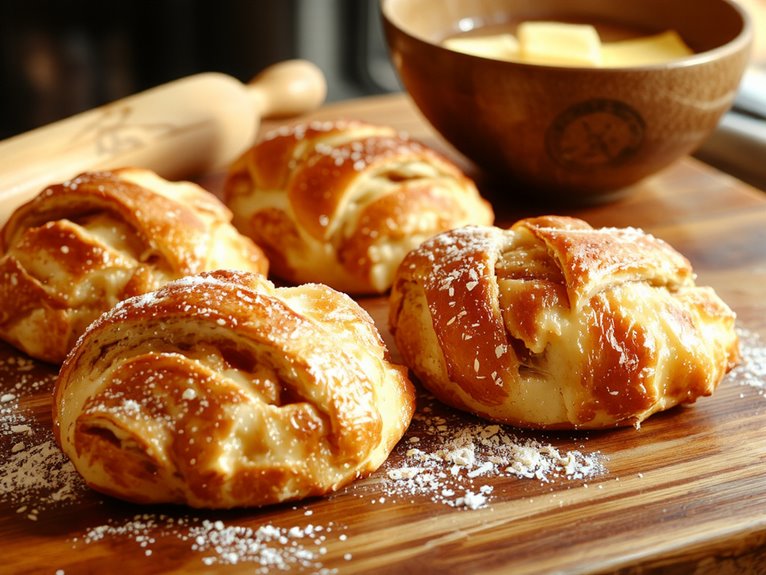
Making croissants at home might seem like a challenge, but this recipe makes it fun and rewarding. You’ll love how flaky and buttery they turn out, with layers that shatter perfectly with every bite. Plus, the smell of fresh croissants baking in your kitchen is pure magic. It’s a great way to impress your family or friends with something special. And once you’ve mastered it, you’ll feel like a true bakery pro!
Recipe
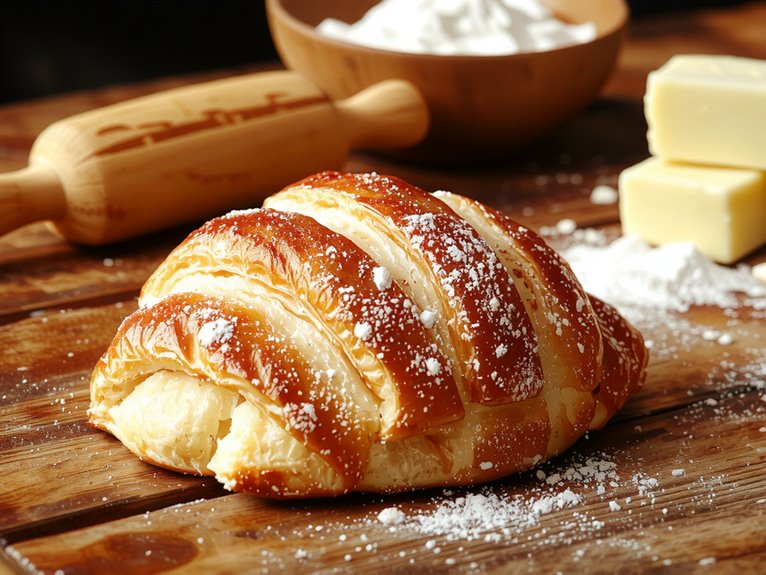
Croissants are a beloved pastry known for their flaky, buttery layers. Making them at home is a rewarding process that yields delicious results.
Ingredients:
- 4 cups (500g) all-purpose flour
- 1/4 cup (50g) granulated sugar
- 1 tbsp (10g) active dry yeast
- 1 1/4 tsp (7g) salt
- 1 1/4 cups (300ml) whole milk, cold
- 2 1/2 sticks (283g) unsalted butter, cold
- 1 egg, beaten (for egg wash)
Instructions:
- Prepare the dough: In a large mixing bowl, combine flour, sugar, yeast, and salt. Gradually add the cold milk while mixing until a dough forms. Knead the dough on a lightly floured surface for about 5 minutes until smooth. Cover with plastic wrap and refrigerate for 1 hour.
- Prepare the butter block: Place the cold butter between two sheets of parchment paper. Pound it with a rolling pin to form a rectangle about 8×5 inches. Wrap and refrigerate.
- Laminate the dough: Roll the chilled dough into a rectangle about 16×10 inches. Place the butter block in the center and fold the dough over it, sealing the edges. Roll the dough into a rectangle again and fold it into thirds (like a letter). Wrap and refrigerate for 30 minutes. Repeat this rolling and folding process twice more, chilling the dough between each fold.
- Shape the croissants: Roll the dough into a large rectangle about 1/4 inch thick. Cut it into triangles, each about 5 inches wide at the base. Roll each triangle tightly from the base to the tip, curving the ends slightly to form a crescent shape. Place on a baking sheet, cover, and let rise for 1-2 hours until puffy.
- Bake: Preheat the oven to 375°F (190°C). Brush the croissants with beaten egg. Bake for 15-20 minutes until golden brown. Let cool slightly before serving.
Notes:
Ensure all ingredients are cold to achieve the best flaky layers. Patience during the folding and chilling process is key to success.
Equipment:
Mixing bowl, rolling pin, parchment paper, baking sheet, plastic wrap.
Time:
Prep time: 4-5 hours (including chilling and rising)
Cooking time: 15-20 minutes
Total time: 4 hours 35 minutes – 5 hours 20 minutes
Cuisine:
French
Serving:
Makes approximately 12 croissants
Nutrition
Croissants are a delicious pastry that offer a mix of fats, carbs, and protein. Here is a breakdown of the nutritional content per serving.
| Nutrient | Amount Per Serving |
|---|---|
| Calories | 272 kcal |
| Total Fat | 15 g |
| Saturated Fat | 9 g |
| Cholesterol | 45 mg |
| Sodium | 240 mg |
| Total Carbs | 30 g |
| Dietary Fiber | 1 g |
| Sugars | 5 g |
| Protein | 5 g |
What To Serve With It
A warm croissant is delicious on its own, but I love pairing mine with jam—strawberry or apricot adds a sweet, fruity contrast. For something richer, try layering slices of brie or sharp cheddar inside for a savory twist. Whether you go sweet or savory, these simple pairings make every bite even better.
Jam Pairings
When I’m enjoying a warm, buttery croissant, I always think about how a good jam can take it to the next level. My go-to is classic strawberry—its sweetness balances the croissant’s richness perfectly. For something tangy, raspberry jam adds a bright kick, while apricot brings a subtle, sunny flavor. If I’m feeling fancy, fig jam with its deep, earthy notes feels luxurious. And let’s not forget orange marmalade—its citrusy zing cuts through the buttery layers. Experiment with flavors you love, but remember: a little goes a long way. Too much jam can overpower the delicate croissant.
Cheese Options
While jam adds a sweet touch, cheese can turn a croissant into something even more satisfying. I love pairing buttery croissants with creamy brie or sharp cheddar—they melt perfectly when warmed. Goat cheese with a drizzle of honey feels fancy yet effortless, while blue cheese brings a bold, tangy flavor that’s hard to resist. For something more classic, I’ll slice up some fresh mozzarella or sprinkle grated Parmesan on top before toasting. Experimenting with cheese can make your croissant feel like a whole new treat, whether you’re eating it for breakfast, a snack, or even dessert. It’s all about finding what you love.