What You’ll Love About This Recipe
Making homemade kimchi is easier than you think, and the results are packed with flavor you just can’t buy in a store.
- Bold, tangy taste – Fresh ingredients like garlic, ginger, and chili flakes create a punchy, addictive flavor.
- Crunchy, crisp texture – The cabbage stays perfectly crunchy, giving every bite a satisfying snap.
- Good for your gut – Fermented foods like kimchi are full of probiotics, making it tasty *and* good for you.
Recipe
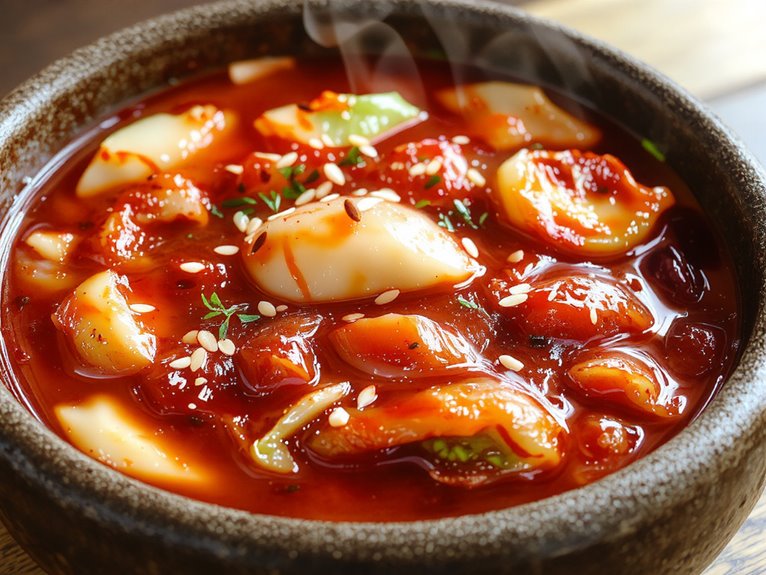
Kimchi is a traditional Korean fermented vegetable dish, primarily made with napa cabbage and a variety of seasonings. This homemade kimchi recipe is simple and authentic, offering a flavorful and probiotic-rich addition to your meals.
Ingredients:
- 1 medium napa cabbage (about 2 lbs)
- 1/4 cup kosher salt
- 1 tablespoon grated garlic
- 1 teaspoon grated ginger
- 1 tablespoon sugar
- 2 tablespoons fish sauce or fermented shrimp paste
- 1/4 cup Korean chili powder (gochugaru)
- 1 medium daikon radish, julienned
- 4 green onions, chopped
Instructions:
- Cut the cabbage lengthwise into quarters. Remove the core and chop into bite-sized pieces.
- In a large bowl, combine the cabbage and salt. Massage the salt into the cabbage until it begins to soften. Let it sit for 2 hours, tossing occasionally.
- Rinse the cabbage thoroughly under cold water to remove excess salt. Drain well.
- In a mixing bowl, combine garlic, ginger, sugar, fish sauce, and chili powder to make the seasoning paste.
- Add the radish and green onions to the seasoning paste and mix well.
- Gently fold the seasoned paste into the cabbage, ensuring it is evenly coated.
- Pack the kimchi tightly into a jar or airtight container, pressing down to remove air pockets.
- Leave the jar at room temperature for 1-2 days to ferment, then refrigerate. The kimchi will continue to ferment and develop flavor over time.
Notes:
- Adjust the amount of chili powder to your preferred spice level.
- Use gloves when handling chili powder to avoid skin irritation.
Equipment:
- Large bowl
- Jar or airtight container
- Gloves (optional)
Time:
- Prep time: 20 minutes
- Cooking time: None
- Fermentation time: 1-2 days
Cuisine:
Korean
Serving:
About 4 cups
Nutrition
Kimchi is a nutritious food rich in vitamins, minerals, and probiotics, making it a healthy addition to any diet. Here is the nutritional breakdown per serving:
| Nutrition | Per Serving |
|---|---|
| Calories | 23 kcal |
| Carbohydrates | 4.6 g |
| Protein | 1.1 g |
| Fat | 0.5 g |
| Fiber | 1.6 g |
| Sodium | 498 mg |
| Vitamin C | 21% DV |
| Vitamin K | 49% DV |
What To Serve With It
I love pairing my homemade kimchi with fluffy steamed rice—it’s a classic combo that never disappoints. Sometimes I add a warm bowl of miso soup or a simple side of roasted vegetables for a complete, comforting meal. Trust me, these pairings make every bite feel like a celebration.
Rice Pairings
When you’ve got a batch of homemade kimchi ready, it’s hard to resist pairing it with something simple yet satisfying—like rice. Steamed white rice is my go-to, as its mild flavor balances the tangy, spicy punch of kimchi perfectly. Sometimes, I’ll mix in a bit of butter and soy sauce for extra richness. Brown rice adds a nutty twist, while sticky rice makes every bite feel comforting. If I’m feeling fancy, I’ll toss the rice and kimchi in a hot skillet for a quick fried rice upgrade. It’s a match made in heaven, every single time.
Sides and Soups
While kimchi is delicious on its own, pairing it with the right sides and soups can take your meal to the next level. I love serving it with a simple bowl of steamed white rice or adding it to a hearty vegetable stir-fry. A classic combo is kimchi with a steaming bowl of Korean tofu soup, or sundubu jjigae, which brings out its tangy flavor. Roasted seaweed or pickled radishes make great crunchy sides, while a warm miso soup balances the spice. Sometimes, I’ll even toss it into a cold noodle salad for an invigorating twist. The options are endless!